Ordered Dithering is Useful and Good

Dithering is the old trick of using patterns to fake more colors than you actually have. If you've ever noticed the crosshatch pattern in old video games, that's ordered dithering. It uses a repeating grid called a Bayer Matrix. It's carefully constructed so that adjacent values are as far apart as possible, which maximally spreads error. Modern game developers, in their infinite wisdom, have decided that this mathematical perfection is a problem to be fixed. The regular pattern is too noticeable, they say. Instead they make a fancy precomputed texture that has the same properties but with no regular pattern: Blue Noise.
Sure, blue noise looks great. But somewhere along the way we forgot why we're dithering in the first place: to save memory. If you need a texture lookup to do dithering, you're spending bandwidth to save bandwidth, it makes no sense. Ordered dithering is just 18 instructions to compute from scratch.
float dither256x256(uvec2 fragCoord){
  uint x = fragCoord.x ^ fragCoord.y;
  uint y = fragCoord.y;
  uint z = x << 16 | y;
  z |= z << 12;
  z &= 0xF0F0F0F0u;
  z |= z >> 6;
  z &= 0x33333333u;
  z |= z << 3;
  z &= 0xaaaaaaaau;
  z  = z >> 9 | z << 6;
  z &= 0x7fffffu;
  return uintBitsToFloat(
    floatBitsToUint(1.) | z
  ) - 1.5; // or -1.0 if you want 0..1
           // instead of -0.5..0.5
}
I came up with this independently around 2016*. I found recently that the general idea of interleaving and reversing bits was first described here*. But I'm the first person to make this optimized implementation*. Which is probably why it hasn't caught on yet.
When you're doing graphics programming, fast dithering should always be in your metaphorical tool belt. You should never reach for higher bit depth without having first tried dithering. Here's an example of how even rgb8 is overkill. This is a comparison between rgb8 and rgb453. Can you tell which one is which?
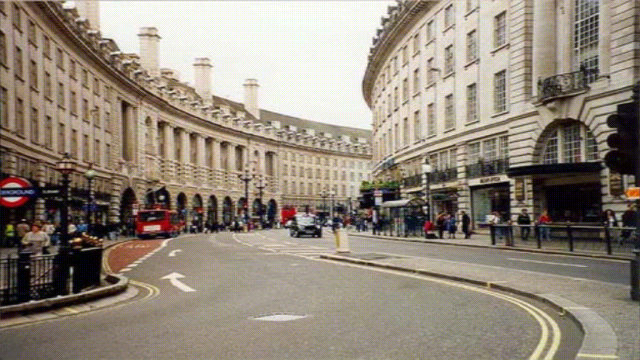
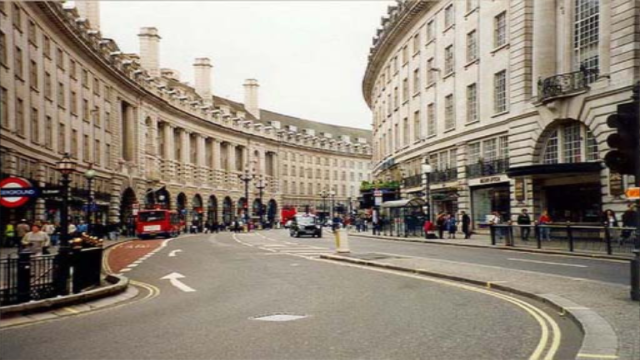
Now here's without the dithering:
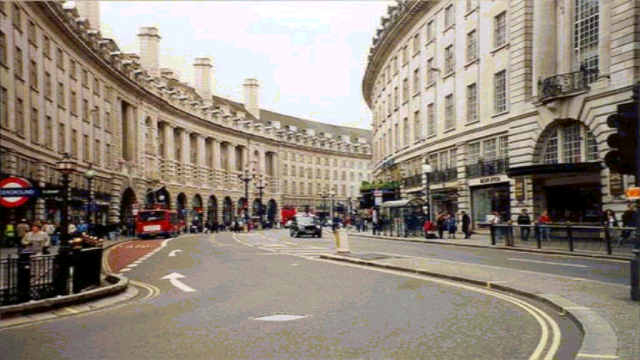
This is how huge the difference is! You're throwing away half your ram by not dithering all your buffers.
Not Just for Quantization
You can (and should) use Bayer Matrices everywhere you would use random sampling, like for picking ray directions for lighting.
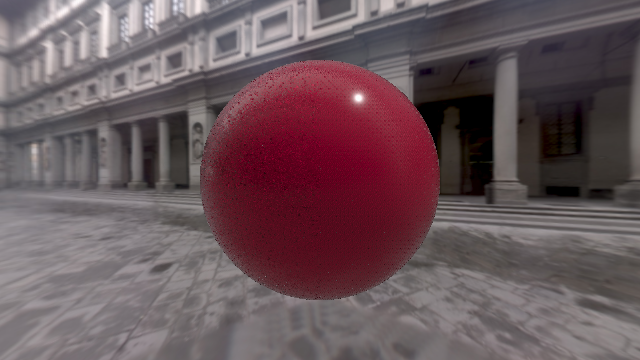
At only one sample per pixel, you can see how the Bayer Matrix grain could easily be smoothed with a light blur. The noise grain has no chance.
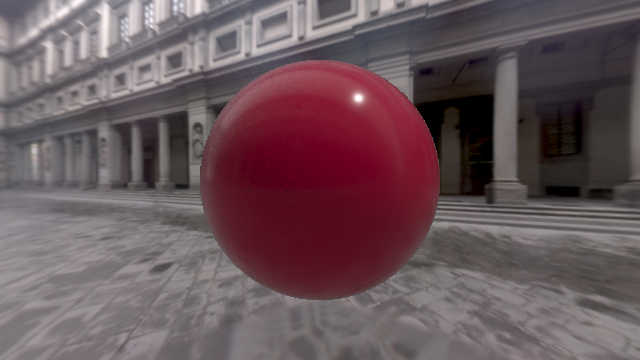
At eight samples per pixel, the Bayer Matrix sampling looks smooth already while the noise sampling still looks rough.
Blurring white noise just gets you a splotchy mess, which you have to fix by doing more samples, or a wider blur. Choosing to use white noise is the dead raccoon in the river that makes everything downstream shit itself.
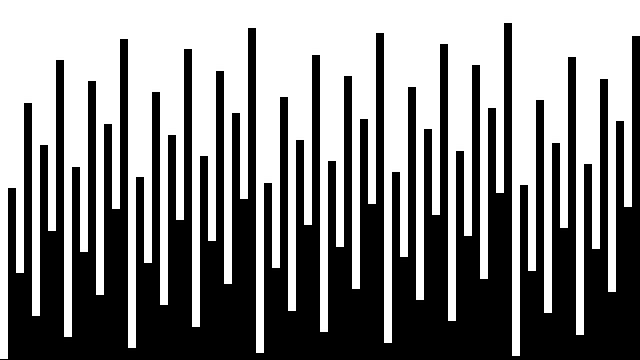
For temporal effects, you can also use the 1D equivalent of a bayer matrix: reversing the bits for the index of the current frame, which gives this pattern:
With technological progress, as pixel densities get higher and higher, dither patterns become harder and harder to see and vram gets more and more strained. Ordered dithering isn't just the past, it's the future as well!